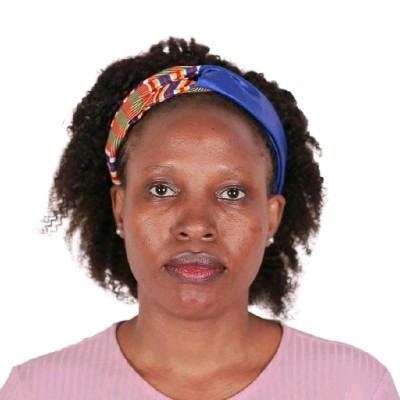
Dr. Irene Nandutu is a Senior Lecturer in the Department of Computer Studies at the Faculty of Science and Education at Busitema University and an Honorary Research Affiliate in the Department of Computer Science at the University of Cape Town.
The goal of Dr. Nandutu's research is to create sustainable artificial intelligence solutions that tackle important environmental, social, and health issues in developing nations. She has used AI in a variety of fields, such as the environment, climate, conservation, and health.
She previously worked for Rhodes University as a member of the Rhodes University Artificial Intelligence Research Group, where she created deep learning-based strategies to mitigate wildlife-vehicle collisions in order to improve road safety and safeguard biodiversity. She received the 2024 Kambule Doctoral Award for this work. Later, Dr. Nandutu became a Postdoctoral Research Fellow at the University of Cape Town's Neuroscience Institute and Artificial Intelligence Research Unit. She received the L'Oréal-UNESCO For Women in Science Award (2024) for her research on the factors affecting early childhood brain development in Sub-Saharan Africa. The award honours female scientists whose contributions showcase scientific brilliance, inventiveness, and a dedication to tackling African issues.
In order to find new ways to use AI for society and sustainability, the environment, conservation, neuroscience, and health, she currently works with her students on broad AI techniques, such as data-driven and knowledge-based approaches.
- Nandutu, I., Atemkeng, M., Okouma, P., Mgqatsa, N., Fendji, J. L. E. K., & Tchakounte, F. (2025).Enhancing
- Gaibie, A., Amir, H., Nandutu, I., & Moodley, D. (2024, November). Predicting and Discovering Weather
- Nandutu, I., Atemkeng, M., Mgqatsa, N., Toadoum Sari, S., Okouma, P., Rockefeller, R., ... & Tchak-ounte, F. (2022). Error Correction Based Deep Neural Networks for Modeling and Predicting South African Wildlife–Vehicle Collision Data. Mathematics, 10(21), 3988.
- Nandutu, I., Atemkeng, M., Okouma, P. Intelligent Systems Using Sensors and/or Machine Learning to
- Nandutu, I., Atemkeng, M. & Okouma, P. Integrating AI ethics in wildlife conservation AI systems in South
Africa: a review, challenges, and future research agenda. AI & Soc (2021)
- AI for Societal Impact using knowledge-based and data-driven approaches.